
Subtotal ₨ 0
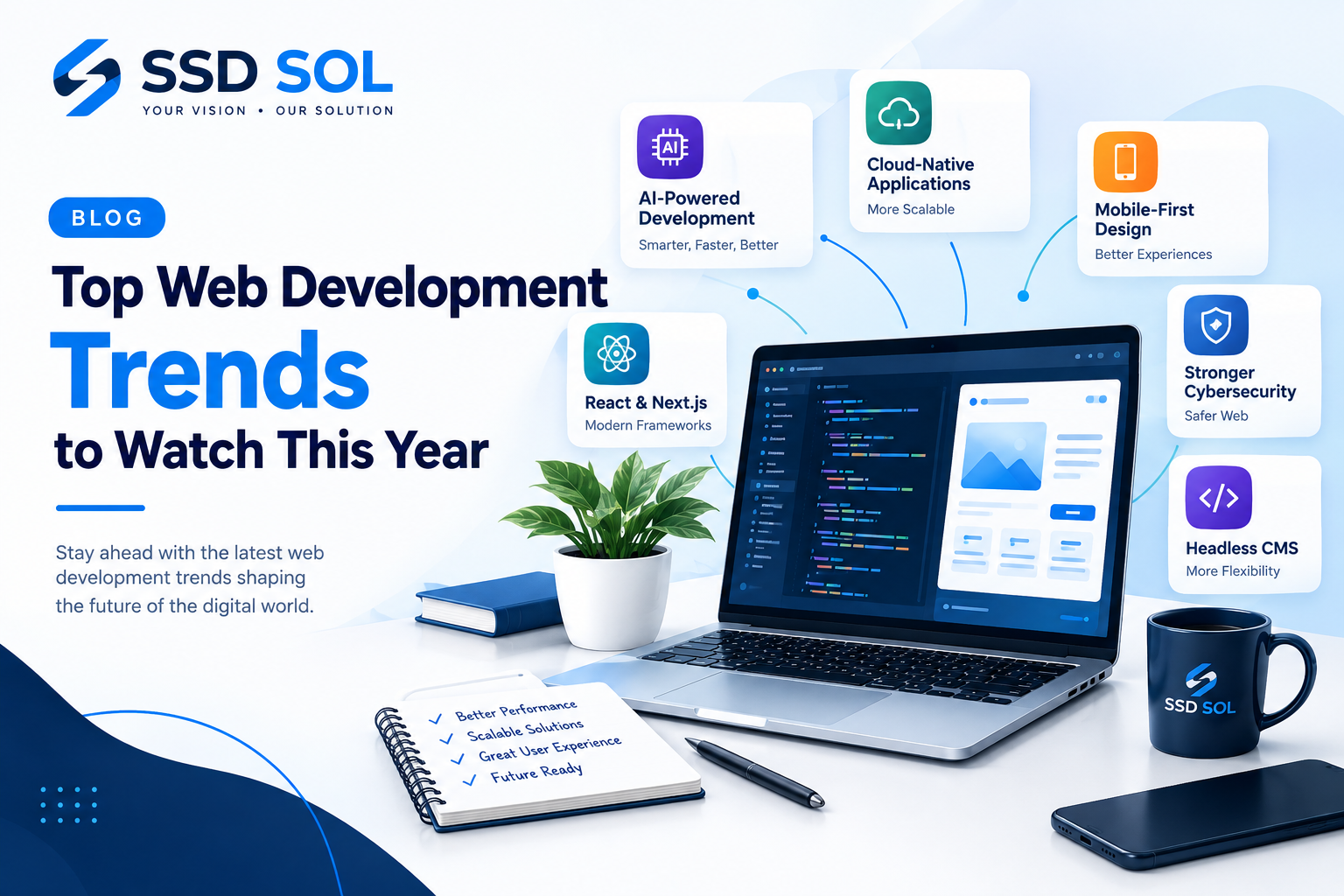
Web development trends move fast, and a website built with last year’s approach can already feel slow or outdated. Whether you run a business or manage a website, knowing which web development trends matter helps you invest in the right features. This guide covers 8 essential trends for 2026 and what each one means for your business.
Table of Contents
- Why Web Development Trends Matter
- 8 Essential Web Development Trends for 2026
- How to Choose Which Web Development Trends to Follow
- Trends to Approach With Caution
- Quick Checklist for a Future-Ready Website
- Final Thoughts
- Frequently Asked Questions
Why Web Development Trends Matter
Visitors expect fast, secure, and easy-to-use websites on every device. Search engines reward sites that deliver that experience, and competitors are improving theirs all the time.
Following the right web development trends helps you attract more visitors, keep them engaged, and turn them into customers. It also keeps your site secure and easier to maintain as technology changes.
8 Essential Web Development Trends for 2026
Here are the eight trends most worth your attention this year, along with practical advice for each.
1. AI-Assisted Development and Personalization
Developers now use AI tools to write code, test features, and fix bugs faster. On the website itself, AI powers chatbots, product recommendations, and personalized content. Use AI where it saves time or improves the visitor experience, and always review the results for quality and accuracy.
2. Performance-First Websites
Speed is a ranking and user experience factor. Google’s Core Web Vitals measure loading, interactivity, and visual stability. Fast sites use lightweight code, compressed images, smart caching, and lazy loading to keep visitors from leaving.
3. Progressive Web Apps (PWAs)
PWAs combine the reach of a website with app-like features such as offline access, fast loading, and home screen installation. They are a cost-effective option for businesses that want an app-like experience without building separate mobile apps.
4. Headless and Composable Architecture
A headless setup separates the content system from the front end, so the same content can power your website, mobile app, and other channels. This approach offers more flexibility and speed, although it needs more technical planning than a standard WordPress site.
5. Serverless and Edge Computing
Serverless platforms run your code on demand and scale automatically, while edge computing serves content from locations closer to your visitors. Together they can reduce loading times and hosting costs for growing websites and web apps.
6. Stronger Web Security
Cyber threats keep growing, so security must be built in from the start. Expect HTTPS everywhere, multi-factor authentication, zero trust practices, regular updates, and automated vulnerability scans. Privacy laws such as GDPR also shape how sites collect and store data.
7. Accessibility by Default
Accessible websites work for people with visual, hearing, motor, or cognitive challenges. Following the WCAG guidelines, with clear contrast, keyboard navigation, and descriptive alt text, improves usability for everyone and supports your SEO.
8. Low-Code and No-Code Tools
Visual builders and low-code platforms let teams launch simple sites and prototypes quickly. They work well for landing pages and internal tools, but complex projects with unique features still need custom development.
How to Choose Which Web Development Trends to Follow
You do not need to adopt every trend. Use these steps to decide what is worth your budget:
- Start with your business goals, such as more leads, sales, or faster support
- Fix the basics first: speed, mobile-friendliness, and security
- Test new ideas on a small scale before a full rollout
- Ask whether a trend solves a real problem for your visitors
- Measure results using traffic, conversions, and load times
Trends to Approach With Caution
Not every popular idea is a good fit for every site. Be careful with these:
- Heavy animations and parallax effects that slow pages down on phones
- AI-generated content published without human review
- Complex architectures for a simple brochure website
- Adding new plugins or tools just because they are popular
A simple, fast, and reliable website almost always beats a complicated one that is hard to maintain.
Quick Checklist for a Future-Ready Website
Use this list to review your own site today:
- Pages load in a few seconds on a mobile connection
- The layout works on phones, tablets, and desktops
- HTTPS, backups, and security updates are in place
- Images have descriptive alt text and forms are keyboard friendly
- Content is clear, useful, and reviewed by a real person
- Analytics track visits, leads, and conversions
Final Thoughts
The best web development trends are the ones that make your website faster, safer, and more useful to your visitors. Focus on performance, security, accessibility, and a smooth mobile experience, then add newer technologies like AI and headless architecture where they truly help.
At System Software Development Solution (SSD Sol), our team in Lahore builds custom websites, e-commerce stores, UI/UX designs, ERP systems, and Android apps. Explore our web development services, learn more about us, or contact us. Want help applying these web development trends to your website? Book a free consultation today.
Frequently Asked Questions
What are the top web development trends this year?
Key trends for 2026 include AI-assisted development, performance-first design, PWAs, headless architecture, serverless and edge computing, stronger security, accessibility, and low-code tools.
Are web development trends important for small businesses?
Yes. Small businesses benefit most from trends that improve speed, security, and mobile experience, since these directly affect search rankings and customer trust.
Do I need to adopt every trend?
No. Choose the trends that match your goals and budget, and avoid adding new technology only because it is popular.
How often should I update my website?
Review your site at least once a year, and keep software, plugins, and security settings updated regularly.
Custom Website Vs Template: 5 Proven Ways To Choose - System Software Development Solution
[…] design, ERP systems, and Android apps. Explore our web development services, read our guide on top web development trends, or contact us for a free consultation and get expert advice on the best option for your […]
The Complete Guide To Responsive Web Design: 7 Proven Tips - System Software Development Solution
[…] and Android apps. Explore our web development services, learn more about us, or read our guide on top web development trends. Need expert help building a mobile-friendly site? Contact us for a free […]