
Subtotal ₨ 0
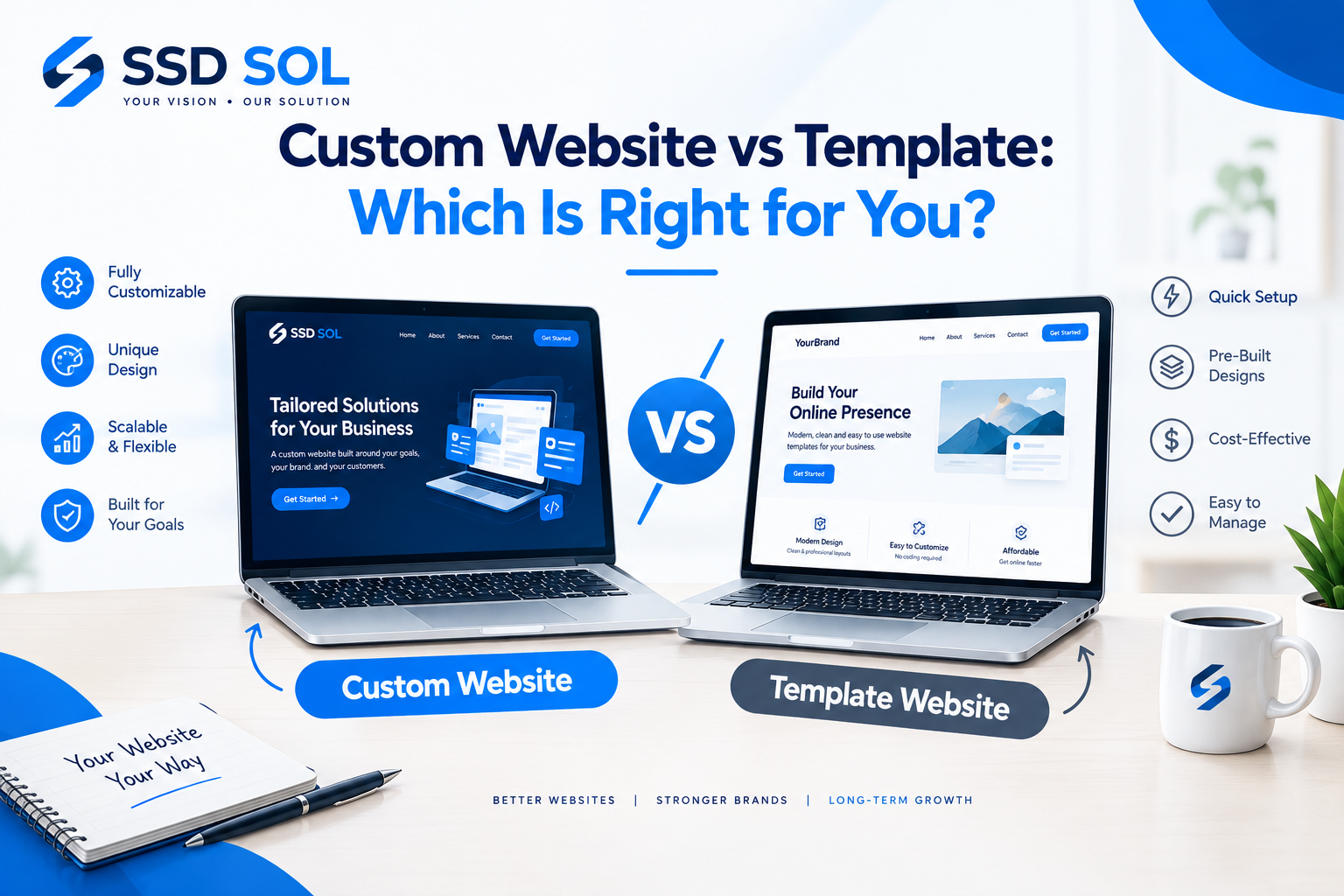
Choosing between a custom website vs template is one of the first big decisions you will make when building your online presence. Both options can work well, but they suit very different goals, budgets, and timelines. In this guide, we break down the real differences so you can pick the right one with confidence.
Table of Contents
- What Is a Custom Website?
- What Is a Template Website?
- Custom Website vs Template: Key Differences
- Pros and Cons of a Custom Website
- Pros and Cons of a Template Website
- When Should You Choose a Template?
- When Should You Choose a Custom Website?
- How to Decide: 5 Proven Ways to Choose
- Final Thoughts
What Is a Custom Website?
A custom website is designed and developed from scratch around your business. A team of designers and developers plans the layout, features, and code specifically for your brand, your audience, and your goals. Nothing is copied from a ready-made theme.
Because every page and feature is built for a purpose, a custom website can include unique functions such as booking systems, customer portals, ERP or CRM integrations, and advanced dashboards. In the custom website vs template comparison, this freedom is the biggest advantage of going custom.
What Is a Template Website?
A template website uses a pre-designed theme or layout. Platforms like WordPress, Wix, and Shopify offer thousands of templates. You choose a design, replace the text and images with your own, and adjust colors and fonts to match your brand.
Templates are popular because they are fast to launch and easy on the budget, which makes them a common starting point for small businesses and startups. That is why the custom website vs template question comes up so often for new brands.
Custom Website vs Template: Key Differences
Here is how the custom website vs template options compare on the factors that matter most:
| Factor | Custom Website | Template Website |
|---|---|---|
| Design | Unique, built around your brand | Pre-made, shared with other sites |
| Cost | Higher upfront investment | Lower upfront cost |
| Launch Time | Weeks to months | Days to a few weeks |
| Flexibility | Almost unlimited | Limited by the theme |
| Performance | Clean, optimized code | Can include unused code and plugins |
| Scalability | Grows easily with your business | May hit limits as you grow |
| SEO Control | Full control over structure and speed | Depends on the theme quality |
| Maintenance | Handled by your developer | Theme and plugin updates needed |
Pros and Cons of a Custom Website
When weighing custom website vs template options, start with an honest look at the strengths and weaknesses of each.
Pros
- A one-of-a-kind design that sets your brand apart
- Built for speed, security, and search engine visibility
- Features tailored to your exact business processes
- Easy to scale as your traffic and services grow
- Easier integration with tools like ERP, HRM, POS, and mobile apps
Cons
- Higher initial cost
- Longer development time
- Needs a skilled development partner
Pros and Cons of a Template Website
The custom website vs template trade-offs work both ways, so here is what a template offers and where it falls short.
Pros
- Affordable and quick to launch
- Simple to edit without coding knowledge
- Large choice of designs and demos
- Good for testing a business idea
Cons
- Your site may look similar to others using the same theme
- Limited customization and unique features
- Heavy themes and extra plugins can slow the site down
- Harder to scale or integrate with complex systems
When Should You Choose a Template?
In the custom website vs template decision, a template wins on speed and cost. It is a smart choice if:
- You are a startup or small business with a limited budget
- You need to launch quickly
- Your website is mainly informational, such as a portfolio, blog, or simple business page
- You want to validate your idea before investing more
When Should You Choose a Custom Website?
In the custom website vs template decision, going custom wins on uniqueness and long-term value. It is the better investment if:
- Your brand needs to stand out in a crowded market
- You need special features, such as user accounts, payment flows, or custom dashboards
- You plan to grow and need a site that scales with you
- Speed, security, and SEO are top priorities
- You want to connect your website with business software
How to Decide: 5 Proven Ways to Choose
Still unsure about the custom website vs template decision? Work through these five questions:
- What is my budget today, and what will it be in two years? A template saves money now, but a rebuild later can cost more.
- How unique does my brand need to look? If design is a competitive advantage, go custom.
- What features do I need? Standard features fit a template. Complex workflows call for custom development.
- How fast do I need to launch? Tight deadline? A template gets you live sooner.
- What are my long-term goals? If you expect rapid growth, a custom build avoids future limits.
A Smart Middle Path
The custom website vs template choice is not permanent, and you do not always have to choose one extreme. Many businesses start with a well-optimized template and later move to a custom website as they grow. Others use a hybrid approach: a custom-designed theme built on a flexible platform like WordPress. This gives you a unique look and easy content management without the full cost of a from-scratch build.
Whatever you choose, make sure your site is fast, mobile-friendly, and meets Google’s Core Web Vitals, since these directly affect user experience and search rankings.
Final Thoughts
There is no single winner in the custom website vs template debate. A template is ideal when you need speed and a small budget. A custom website is ideal when you need a unique identity, advanced features, and room to grow. The right choice depends on your goals, your timeline, and how you plan to scale.
At System Software Development Solution (SSD Sol), our team builds both custom and template-based websites, along with UI/UX design, ERP systems, and Android apps. Explore our web development services, read our guide on top web development trends, or contact us for a free consultation and get expert advice on the best option for your business.
Frequently Asked Questions
Is a custom website better than a template?
Not always. A custom website offers more flexibility, performance, and uniqueness, while a template is faster and cheaper. The better choice depends on your budget, goals, and features needed.
Which is better for a small business: custom website vs template?
For a small business with a tight budget, a template is usually the better starting point. When the custom website vs template choice is about standing out and scaling, custom is the smarter long-term option.
Are template websites bad for SEO?
No. A well-built, lightweight template can rank well. Problems usually come from bloated themes, too many plugins, and slow loading speeds.
Can I move from a template to a custom website later?
Yes. Many businesses launch with a template and upgrade to a custom build once they grow. Planning your content and URL structure early makes the move smoother.
How long does it take to build a custom website?
It depends on size and features, but most custom projects take several weeks to a few months, compared to days or weeks for a template.