
Subtotal ₨ 0
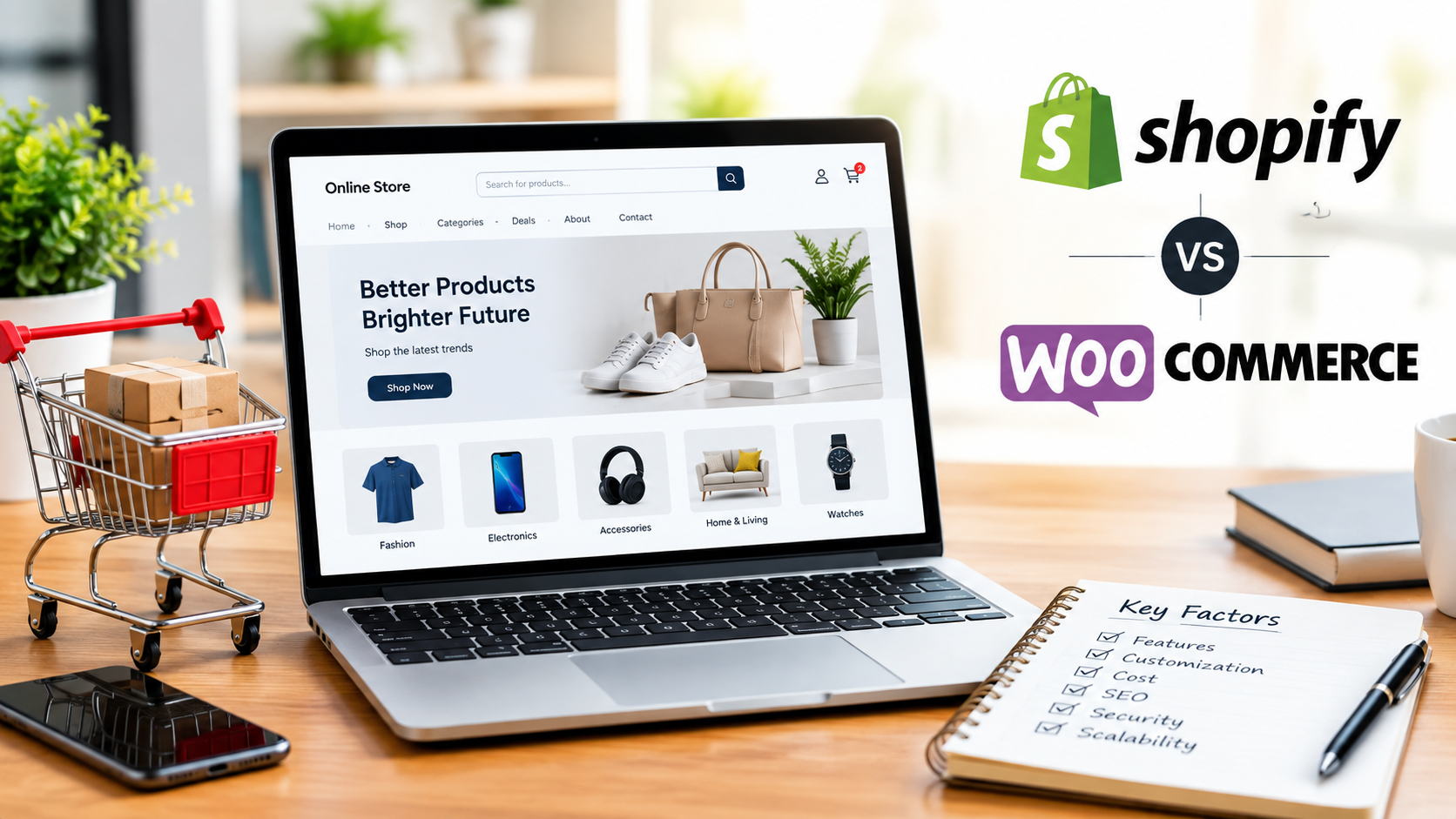
Choosing an E-commerce Platform: A Complete Guide
Choosing the right e-commerce platform is one of the most important decisions when starting an online store. Your platform affects website performance, product management, payment processing, security, SEO, scalability, and the overall customer experience.
With so many options available, business owners often find it difficult to decide which platform is suitable for their needs. The right choice depends on your business model, budget, technical requirements, product range, and future growth plans.
In this guide, we will explain the key factors you should consider when choosing an e-commerce platform.
What Is an E-commerce Platform?
An e-commerce platform is software that allows businesses to create and manage an online store. It typically provides tools for adding products, managing inventory, processing orders, accepting payments, and communicating with customers.
A good platform should make it easy to manage your store while providing enough flexibility to support your business as it grows.
Why Choosing the Right E-commerce Platform Matters
Your e-commerce platform becomes the foundation of your online business. A poor choice can create problems with performance, security, customization, and scalability.
The right platform can help you:
- Manage products efficiently
- Process online orders
- Accept multiple payment methods
- Improve customer experience
- Optimize pages for search engines
- Integrate third-party tools
- Scale your business over time
If you need a customized online store, professional web development services can help you build an e-commerce solution around your specific business requirements.
Key Factors to Consider
1. Business Requirements
Start by identifying what your business actually needs.
Consider:
- Number of products
- Product variations
- Target customers
- Required payment methods
- Shipping requirements
- Inventory management
- Marketing integrations
- Customer account features
A small business may need a simple platform, while a larger business may require advanced customization and integrations.
2. Ease of Use
Your platform should be easy for your team to manage.
Look for a system that allows you to:
- Add products easily
- Update prices
- Manage inventory
- Process orders
- Create discounts
- View customer information
- Manage content
An easy-to-use dashboard can save your team considerable time.
3. Customization
Every business has different requirements. Therefore, customization is an important consideration.
You may need custom:
- Product pages
- Checkout processes
- Customer dashboards
- Shipping rules
- Payment integrations
- Inventory systems
For businesses with complex requirements, customized software development solutions can provide greater flexibility.
4. SEO Features
Search engine optimization can help customers discover your products through search engines.
Your platform should support:
- Editable page titles
- Meta descriptions
- SEO-friendly URLs
- Image optimization
- Structured data
- Mobile-friendly pages
- Fast loading speeds
- Blog functionality
SEO should be considered from the beginning rather than added after the store is launched.
5. Security
Security is essential for every online store.
Your platform should support secure authentication, HTTPS, regular updates, secure payment integrations, and appropriate protection for customer information.
Businesses should also follow good security practices for administrator accounts and third-party integrations.
6. Scalability
Think about where your business will be in the next few years.
Your platform should be capable of handling:
- More products
- More visitors
- More orders
- Additional payment methods
- New markets
- New integrations
A platform that works for 100 products may not be suitable when your catalog grows to thousands of products.
Hosted vs Self-Hosted E-commerce Platforms
One major decision is whether to use a hosted or self-hosted solution.
Hosted platforms generally manage much of the technical infrastructure for you. Self-hosted solutions can provide greater control but usually require more technical management.
Your choice should depend on your technical expertise, budget, customization requirements, and maintenance resources.
How Much Does an E-commerce Platform Cost?
The total cost can include:
- Platform fees
- Hosting
- Domain registration
- Development
- Design
- Plugins or extensions
- Payment processing
- Maintenance
- Security
- Marketing
Instead of looking only at the initial price, consider the total cost of ownership.
How to Choose the Right Platform
Before making your final decision, create a checklist of your business requirements.
Ask:
- How many products will I sell?
- Which payment methods do I need?
- Do I need custom functionality?
- How important is SEO?
- How much traffic do I expect?
- Will I need integrations?
- Who will manage the website?
- How quickly do I expect the business to grow?
Answering these questions will make platform selection much easier.
Final Thoughts
Choosing an e-commerce platform is a long-term business decision. The best solution is not necessarily the platform with the most features; it is the one that matches your business requirements, budget, technical capabilities, and growth plans.
Take time to compare functionality, security, SEO, scalability, customization, and ongoing costs before launching your store.
If you need help planning or developing an online business solution, explore SSD Solutions for technology and development services.
Frequently Asked Questions
What is the best e-commerce platform?
There is no single platform that is ideal for every business. The right option depends on your products, budget, technical requirements, and growth plans.
What should I consider before choosing an e-commerce platform?
Consider features, cost, security, SEO, customization, integrations, ease of use, performance, and scalability.
Can an e-commerce platform be customized?
Yes. Depending on the platform, businesses can customize design, functionality, integrations, checkout processes, and other components.
Is SEO important when selecting an e-commerce platform?
Yes. SEO features can make it easier to optimize product and category pages for search engines.