
Subtotal ₨ 0
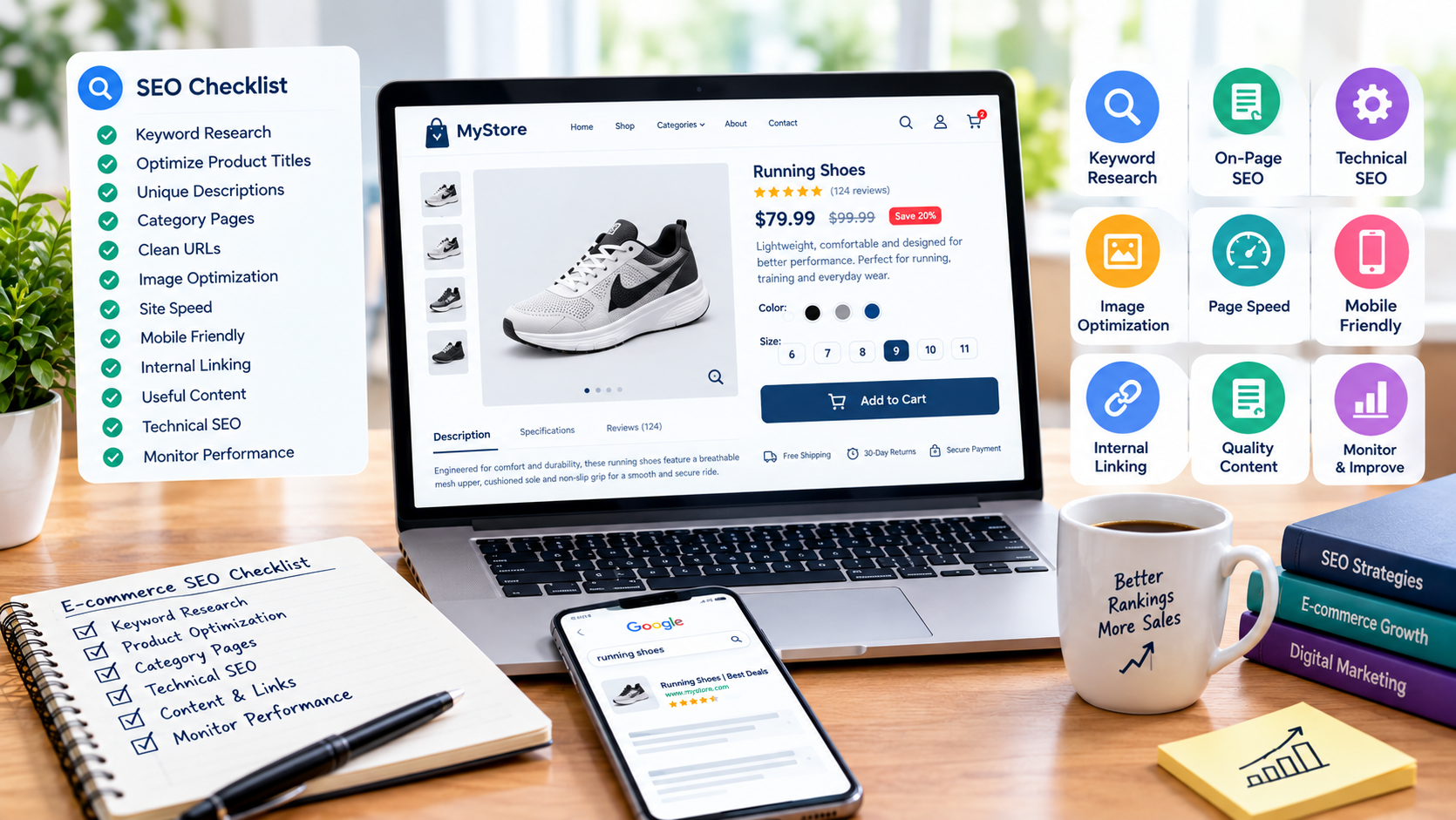
Search engines can be an important source of traffic for online stores. However, simply publishing products is not enough to build strong organic visibility.
E-commerce SEO involves optimizing technical elements, product pages, categories, content, images, and the overall shopping experience.
Use the following e-commerce SEO checklist when reviewing your online store.
1. Keyword Research
Start by identifying what your potential customers search for.
Research keywords related to:
- Products
- Categories
- Problems
- Brands
- Features
- Buying intent
Focus on keywords that are relevant to your actual products and audience.
2. Optimize Product Titles
Product titles should be clear and descriptive.
Where appropriate, include important information such as:
- Product type
- Brand
- Model
- Size
- Relevant attributes
Avoid keyword stuffing.
3. Write Unique Product Descriptions
Do not rely entirely on copied manufacturer descriptions.
Create useful descriptions that explain product features and benefits.
4. Optimize Category Pages
Category pages can target broader search terms than individual product pages.
Make sure category pages have:
- Clear headings
- Useful introductory content
- Relevant products
- Good internal links
- Descriptive metadata
5. Improve URLs
Use short, readable URLs.
For example:
example.com/category/mens-shoes
is generally easier to understand than a URL containing unnecessary parameters or random strings.
6. Optimize Images
Compress images and use descriptive file names and ALT text.
For example:
black-running-shoes.jpg
is more descriptive than:
IMG12345.jpg
7. Improve Page Speed
Performance matters for user experience.
Review:
- Image sizes
- JavaScript
- CSS
- Hosting
- Caching
- Third-party scripts
Professional web development services can help with technical optimization when performance issues require development work.
8. Make Your Store Mobile-Friendly
Your website should provide a smooth experience across smartphones, tablets, and desktop devices.
Check navigation, product images, buttons, filters, forms, and checkout on mobile devices.
9. Create Internal Links
Internal links help users and search engines discover related pages.
Link relevant:
- Categories
- Products
- Blog articles
- Service pages
- Guides
For example, an article about online stores can naturally link to e-commerce development solutions.
10. Add Useful Content
Create content that answers customer questions.
Examples include:
- Buying guides
- Product comparisons
- How-to articles
- FAQs
- Product care guides
- Industry guides
11. Review Technical SEO
Check:
- Indexing
- XML sitemap
- Canonical URLs
- Broken links
- Redirects
- Duplicate content
- Structured data
- Mobile usability
12. Monitor SEO Performance
SEO requires ongoing monitoring.
Track:
- Organic traffic
- Search impressions
- Rankings
- Click-through rates
- Conversions
- Indexed pages
Conclusion
An e-commerce SEO strategy should combine technical optimization, useful content, strong product pages, internal linking, mobile usability, and good website performance.
Use this checklist regularly to identify areas that need improvement.
If your online store requires development, integrations, or technical improvements, SSD Solutions can help businesses with technology-focused development services.
FAQs
What is the most important part of e-commerce SEO?
There is no single element that guarantees success. Technical health, relevant content, product optimization, usability, internal linking, and authority all contribute to an SEO strategy.
How often should I perform an SEO audit?
A basic review can be performed regularly, while deeper technical audits can be scheduled based on the size and complexity of the website.
Are product descriptions important for SEO?
Yes. Unique and useful product descriptions can help search engines understand products and help customers make purchasing decisions.