
Subtotal ₨ 0
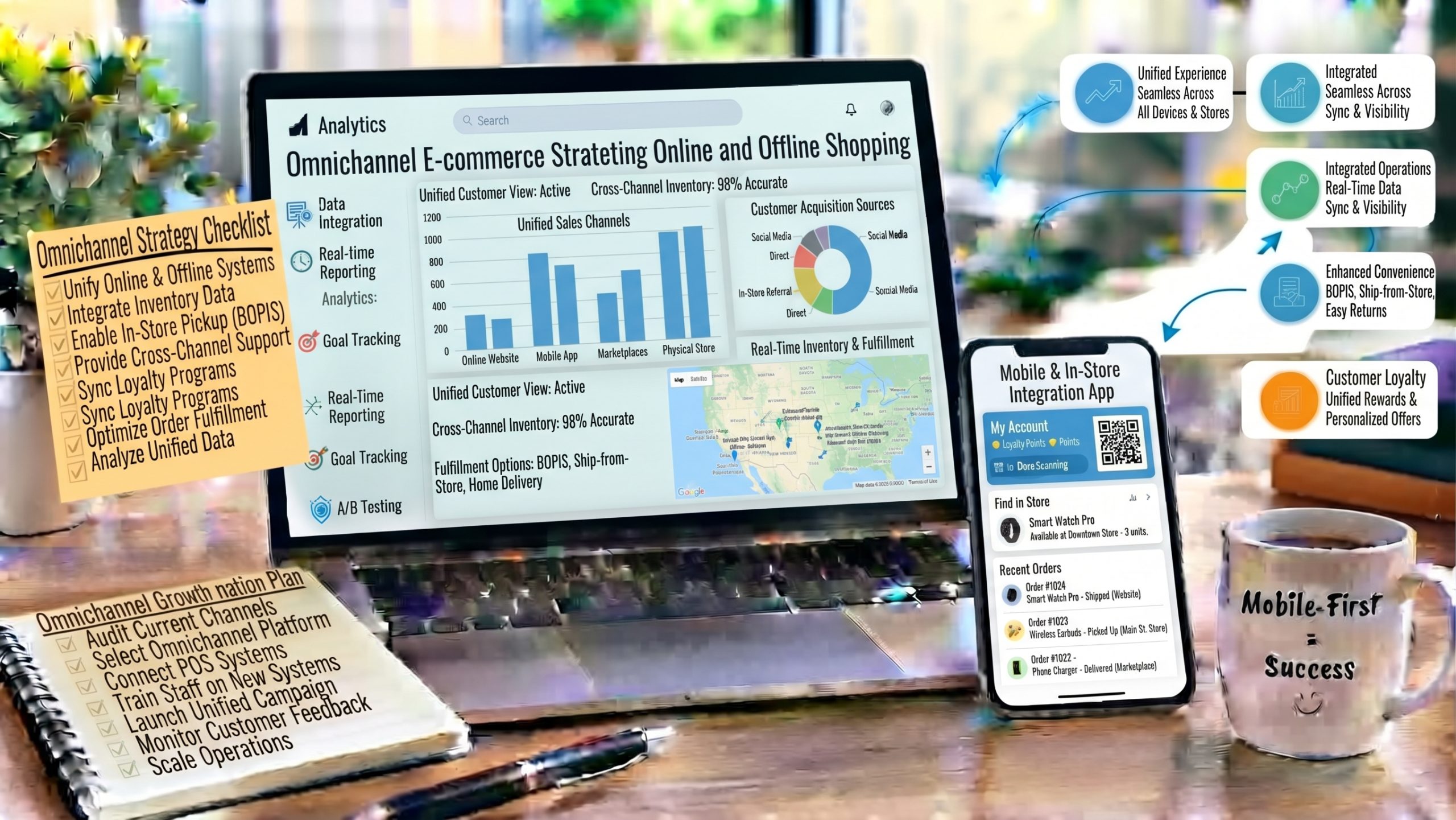
Customers no longer shop through only one channel. A person may discover a product on social media, visit an online store, check availability on a smartphone, and then purchase the product from a physical store.
Omnichannel e-commerce focuses on connecting these different shopping channels to create a more consistent customer experience.
What Is Omnichannel E-commerce?
Omnichannel e-commerce connects multiple customer touchpoints into a unified experience.
These touchpoints may include:
- E-commerce websites
- Mobile applications
- Physical stores
- Social media
- Online marketplaces
- Customer support
- POS systems
The goal is to make the shopping journey feel connected rather than fragmented.
Why Omnichannel Matters
Customers expect convenience.
For example, a customer may want to check whether a product is available at a nearby store before visiting.
Another customer may start shopping on a phone and finish the purchase on a desktop computer.
An omnichannel strategy allows businesses to support these behaviors.
Connect Inventory
Inventory synchronization is one of the most important parts of omnichannel commerce.
Businesses need accurate information about stock across different channels.
If an item is sold in a physical store, the online inventory should ideally reflect the updated availability.
This helps prevent customers from ordering products that are no longer available.
Integrate POS Systems
Point-of-sale systems can play an important role in omnichannel retail.
Connecting POS with e-commerce platforms can help businesses manage products, inventory, and sales information more efficiently.
This creates better visibility across physical and online operations.
Create Consistent Branding
Customers should recognize the same business across different channels.
Branding, product information, pricing policies, and customer service should remain consistent wherever possible.
Consistency can make the business feel more professional and trustworthy.
Improve Customer Support
Customers may contact a business through social media, email, phone, website chat, or physical stores.
An omnichannel strategy can help businesses create more connected support experiences.
Customer information should be handled carefully and securely so that support teams can provide useful assistance.
Mobile Apps and Websites
Mobile apps can provide additional opportunities for customer engagement.
Customers may use apps to browse products, receive notifications, manage orders, or access loyalty features.
However, businesses should ensure that the website and mobile app work together rather than creating disconnected experiences.
Measure Channel Performance
Businesses should track how customers interact with different channels.
Analytics can help identify which channels drive product discovery, purchases, and repeat engagement.
This information can help businesses invest resources more effectively.
Final Thoughts
Omnichannel e-commerce allows businesses to connect online and offline shopping experiences. Websites, mobile apps, physical stores, marketplaces, POS systems, and customer support can work together to provide customers with greater convenience.
Successful omnichannel strategies depend on integration, accurate inventory, consistent branding, reliable technology, and good customer experience.
As businesses grow, professional software and e-commerce integration can help connect different systems into a more efficient digital ecosystem. SSD Solutions can support businesses with modern technology and integration solutions.
Frequently Asked Questions
What is omnichannel e-commerce?
It is an approach that connects multiple shopping and communication channels into a unified customer experience.
Is omnichannel the same as multichannel?
Multichannel businesses use multiple channels, while omnichannel focuses more strongly on connecting those channels into one consistent experience.
Does omnichannel require a mobile app?
No. Businesses can build omnichannel experiences using websites, physical stores, marketplaces, social media, and other channels.
Why is inventory synchronization important?
It helps businesses maintain accurate stock information across different sales channels.