
Subtotal ₨ 0
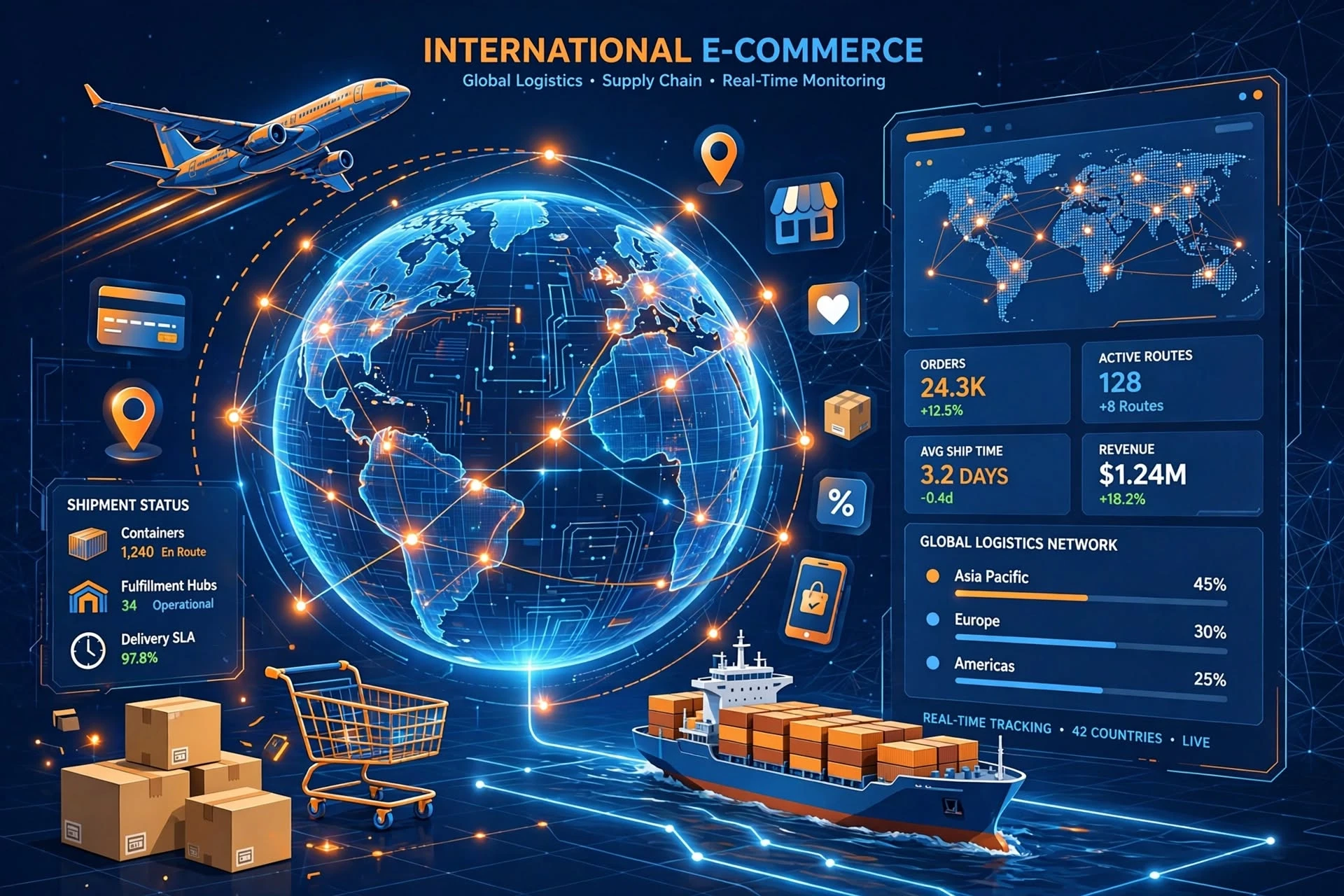
International ecommerce lets your online store sell to customers in other countries, and it is one of the most effective ways to grow beyond a crowded home market. But selling abroad is not as simple as turning on worldwide shipping. Taxes, payments, languages, and delivery all work differently from country to country.
In this guide, you’ll learn 10 practical steps to prepare your store for international ecommerce, so you can enter new markets with confidence and avoid costly mistakes.
What Is International Ecommerce and Why It Matters
International ecommerce means selling products to customers outside your home country through your online store. It can include shipping physical products abroad, selling digital products worldwide, or using local marketplaces.
The benefits are clear:
- New customers: Reach shoppers who cannot buy from local competitors.
- Less seasonal risk: Different regions have different peak seasons, which can smooth out your sales.
- Stronger brand: A global presence builds trust and awareness.
- Room to scale: When one market slows down, another can keep growing.
However, international ecommerce also brings new challenges, which is why preparation matters.
10 Best Steps to Prepare Your Store for International Ecommerce
Follow these steps in order. Each one reduces risk and makes your launch smoother.
1. Research Your Target Markets
Don’t launch in every country at once. Start with two or three markets and study them closely. Look at demand for your products, local competitors, average order values, and how people shop online.
Check where your current website visitors and customers already come from, since existing demand is the easiest place to start. A free tool like Google Trends can show how interest in your products differs by country.
2. Understand Legal Rules, Taxes, and Duties
Every country has its own rules for imports, product safety, labeling, privacy, and consumer rights. Check whether your products are restricted or need certification, and learn about sales tax, VAT, and import duties.
For example, if you sell to customers in the European Union, the EU VAT One-Stop Shop can simplify VAT reporting for distance sales. Rules change, so confirm the details with an accountant or customs expert before you launch.
3. Decide Who Pays Duties and Taxes
Shoppers hate surprise fees at delivery. Decide whether customers pay duties and taxes at checkout (often called delivered duty paid, or DDP) or on delivery (delivered at place, or DAP).
Showing the full cost upfront reduces abandoned carts and refused parcels. The Incoterms rules explain who is responsible for each part of the shipping process.
4. Set Up Multi-Currency Pricing
Customers are more likely to buy when they see prices in their own currency. Use a multi-currency feature or plugin so prices, shipping costs, and taxes display clearly.
Decide whether to round prices so they look natural (for example, 19.99 instead of 19.37) and how often to update exchange rates. Also check for currency conversion fees from your payment provider.
5. Offer Local Payment Methods
Credit cards are not the top choice everywhere. Many countries prefer bank transfers, digital wallets, or buy now, pay later options.
Research the most popular payment methods in each target market and add them at checkout. Make sure your payment provider supports international payments, and keep your checkout secure.
6. Translate and Localize Your Store
Translation is only the start. Localization means adapting your store to local culture and habits. Use professional translators, or carefully reviewed translations, for product pages, checkout, policies, and emails.
Adjust date formats, units of measurement, size charts, and images so they feel natural to local shoppers. Avoid relying only on machine translation for key pages.
7. Optimize for International SEO
Strong international SEO is the foundation of international ecommerce growth, because shoppers must be able to find the right version of your store.
Use separate URLs for each language or region, such as subfolders like /fr/ or /de/, and add hreflang tags to tell Google which page is meant for which audience. Google explains this clearly in its guide to localized versions.
Also translate your page titles and meta descriptions, and research keywords in each language rather than translating them word for word.
8. Plan Shipping and Delivery
Shipping is often the biggest challenge in international ecommerce. Compare carriers, delivery times, and tracking quality. Decide whether to offer flat-rate, free, or calculated shipping, and set realistic delivery estimates.
Think about using a fulfillment partner or warehouse closer to your customers to cut delivery time and costs, and make sure your packaging protects products on long journeys.
Fast pages also matter for global visitors, so read our ecommerce website speed optimization guide to keep your store quick everywhere.

9. Create a Clear Returns Policy
Returns are harder across borders, so set expectations early. Explain who pays for return shipping, how long customers have to return items, and how refunds work.
In some markets, it may be cheaper to refund without asking for the item back. A clear, fair policy builds trust with first-time customers.
10. Test, Launch, and Support Each Market
Offer support in your customers’ language and time zone where possible, using email, live chat, or an FAQ page.
Before launch, place test orders from each target country. Check currency, taxes, shipping rates, emails, and mobile checkout. After launch, track conversion rate, cart abandonment, and delivery times by country, then keep improving.
Keep your store healthy with regular updates and backups, as covered in our ecommerce website maintenance guide.
International Ecommerce Preparation Checklist
- Choose two or three target markets
- Confirm legal, tax, and customs requirements
- Decide who pays duties and taxes
- Set up multi-currency pricing
- Add local payment methods
- Translate and localize key pages
- Add localized URLs and hreflang tags
- Compare carriers and set delivery times
- Publish a clear returns policy
- Test orders from every target country
Common International Ecommerce Mistakes to Avoid
- Launching in too many countries at once
- Using machine translation without review
- Hiding duties, taxes, and shipping costs until checkout
- Offering only credit card payments
- Ignoring local laws and product rules
- Skipping international SEO and hreflang tags
- Having no plan for returns
Final Thoughts on International Ecommerce
International ecommerce offers big growth, but only when your store is ready. Start small, choose the right markets, and get the basics right: taxes, payments, translation, SEO, shipping, and support. Then expand step by step, using real data from each country.
If you need help preparing your store for global sales, contact our team for expert support.
With the right preparation, your store can compete confidently anywhere in the world.
International Ecommerce FAQs
What is international ecommerce?
International ecommerce is selling products or services to customers in other countries through your online store.
How do I start selling internationally?
Choose two or three target markets, check legal and tax rules, set up multi-currency pricing and local payments, translate your store, and plan shipping and returns before you launch.
Do I need a separate website for each country?
Not always. Many stores use one website with language or region subfolders and hreflang tags. A separate domain can make sense for large markets, but it takes more work to manage.
How do I handle taxes and duties when selling abroad?
Check the tax and import rules in each target country, and decide whether customers pay duties at checkout or on delivery. An accountant or customs broker can confirm the exact requirements.
Which payment methods should I offer?
Offer the methods that are popular in each market, such as cards, digital wallets, bank transfers, or buy now, pay later options.