
Subtotal ₨ 0
Common UX Design Mistakes: 7 Critical Errors and How to Fix Them
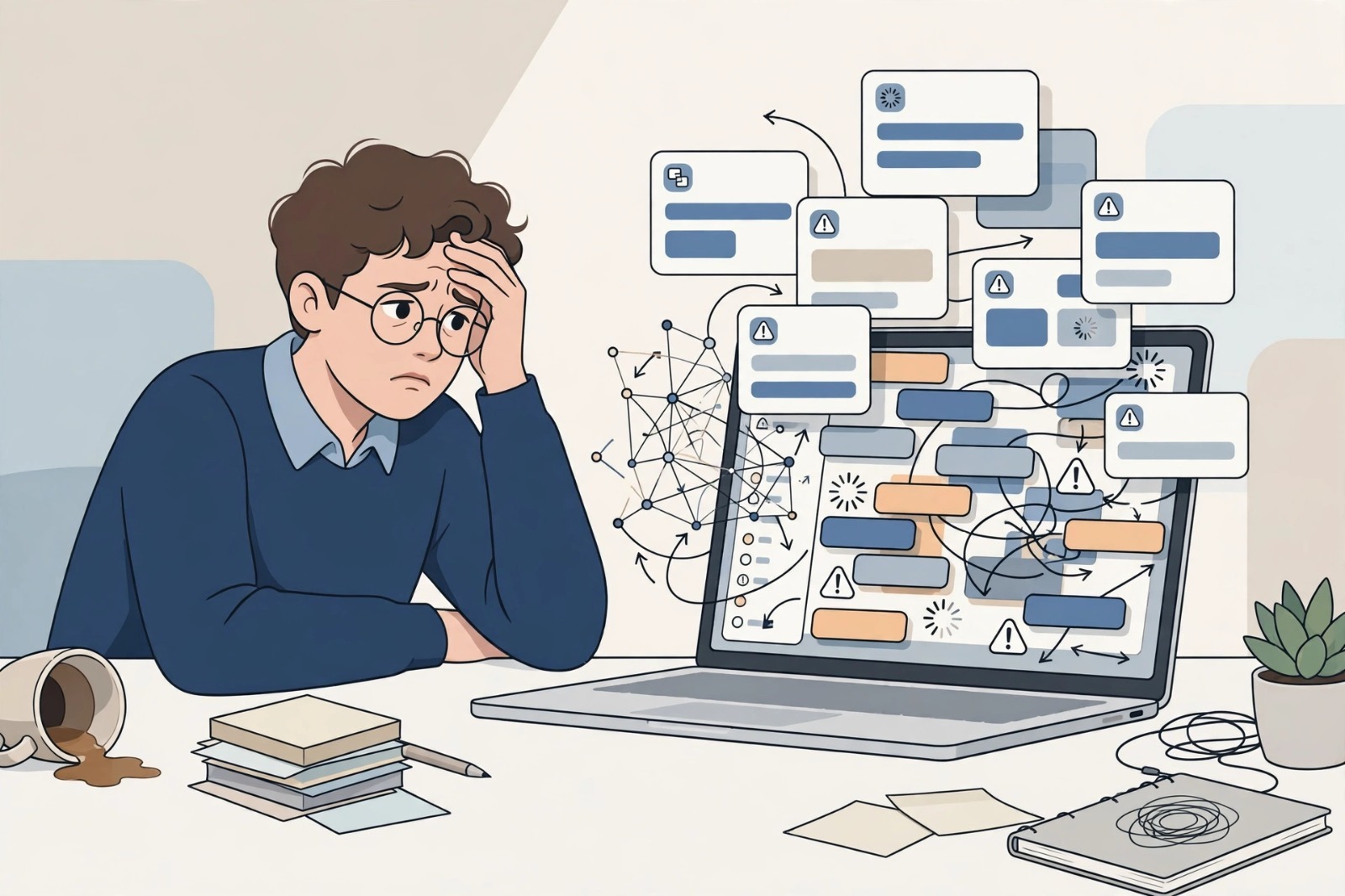
Even the best-looking website can fail if the user experience is bad. Understanding common UX design mistakes is the fastest way to improve your product and keep users happy.
At SSDSOL, we see these mistakes every day when we audit client websites. This guide covers the 7 most critical common UX design mistakes and how to fix them with proven, powerful solution.
What Are Common UX Design Mistakes and Why They Matter?
Common UX design mistakes are design decisions that confuse users, slow them down, or make them leave your site. They matter because one bad experience can cost you a customer forever. In fact, 88% of users are less likely to return after a bad UX experience.
The most common UX design mistakes happen when teams design for themselves, not for their users. They skip research, ignore accessibility, and focus only on visuals. Learning to spot these common UX design mistakes early will save you time, money, and reputation.
7 Critical Common UX Design Mistakes to Avoid
Here are the 7 most damaging common UX design mistakes we fix for our clients. This list comes directly from our experience in professional UI/UX Design projects.
Explore our expert UI/UX Design services to avoid these mistakes.
Mistake 1: Ignoring User Research – The Biggest of All
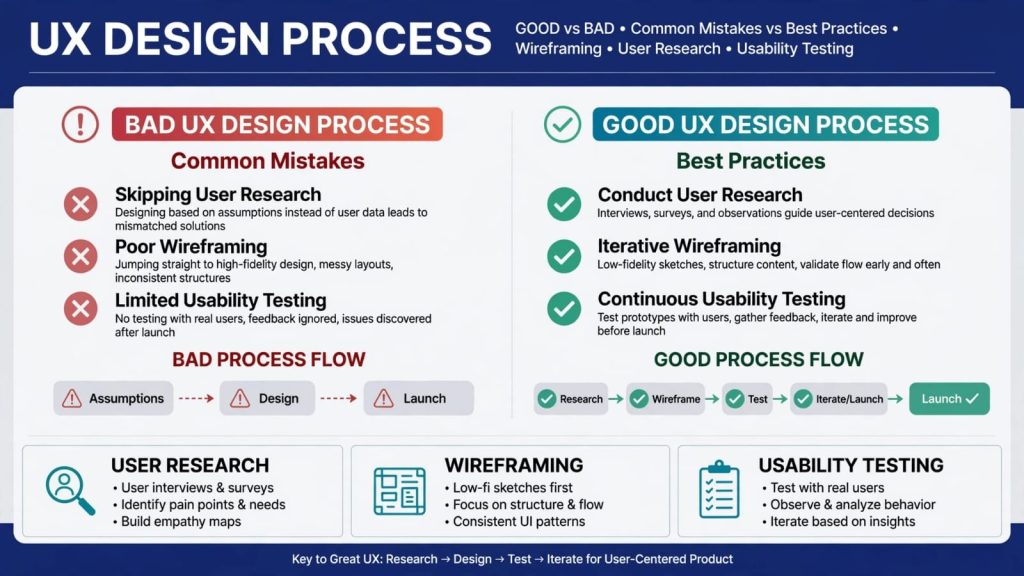
The number one among common UX design mistakes is designing without talking to users. Assuming you know what users want leads to products nobody needs.
According to Nielsen Norman Group’s research on UX design process, user research is the foundation of good UX.
Fix: Conduct 5 user interviews, create personas based on real data, and map user journeys before you design anything.
Mistake 2: Poor Navigation and Confusing Structure
If users can’t find what they need in 3 clicks, they will leave. Hidden menus, inconsistent labels, and no breadcrumbs frustrate users.
Fix: Use clear labels like “Shop” not “Explore Our Wonders.” Keep navigation visible, consistent, and logical.
Mistake 3: Cluttered Layout with No Visual Hierarchy
Overcrowded interfaces overwhelm users. When everything is bold, nothing is important.
Fix: Use whitespace, clear headings, and a single primary button.
Mistake 4: Slow Loading and No Feedback
Users expect a page to load in under 3 seconds. Not showing loading states, progress bars, or confirmation messages is one of the most critical common UX design mistakes.
Fix: Always provide instant feedback. Use skeleton loaders and microinteractions.
Our Web Development team always implements performance + feedback.
Mistake 5: Ignoring Accessibility – A Costly Mistake
Accessibility is not optional. Low contrast text, tiny fonts, and no keyboard navigation exclude millions of users.
For accessibility standards, always follow WCAG guidelines.
Mistake 6: Inconsistent Design and Confusing Buttons
Using 5 different button styles, random colors, and inconsistent icons breaks trust and confuses users.
Fix: Create a design system with fixed colors, typography, and components.
Mistake 7: No Usability Testing
Launching without testing with real users is the final and most expensive of all common UX design mistakes.
Fix: Test with just 5 users before launch—you can avoid 85% of issues.
How to Fix Common UX Design Mistakes: Proven Workflow
To fix these common UX design mistakes, follow this powerful 5-step process we use at SSDSOL:
- User Research to understand real needs
- Wireframing to map structure
- Prototyping to build clickable mockups
- Testing to validate with real users
- Iteration to refine and improve continuously
This workflow prevents common UX design mistakes from happening again.
Contact System Software Development Solution to audit your UX and fix costly mistakes.
Conclusion
Avoiding common design mistakes is what separates an amazing product from a frustrating one.
When you research first, design with hierarchy, ensure accessibility, and test continuously, you create stunning experiences that users love.
Stop making these 7 critical common UX design mistakes and start building powerful, user-friendly products today.