
Subtotal ₨ 0
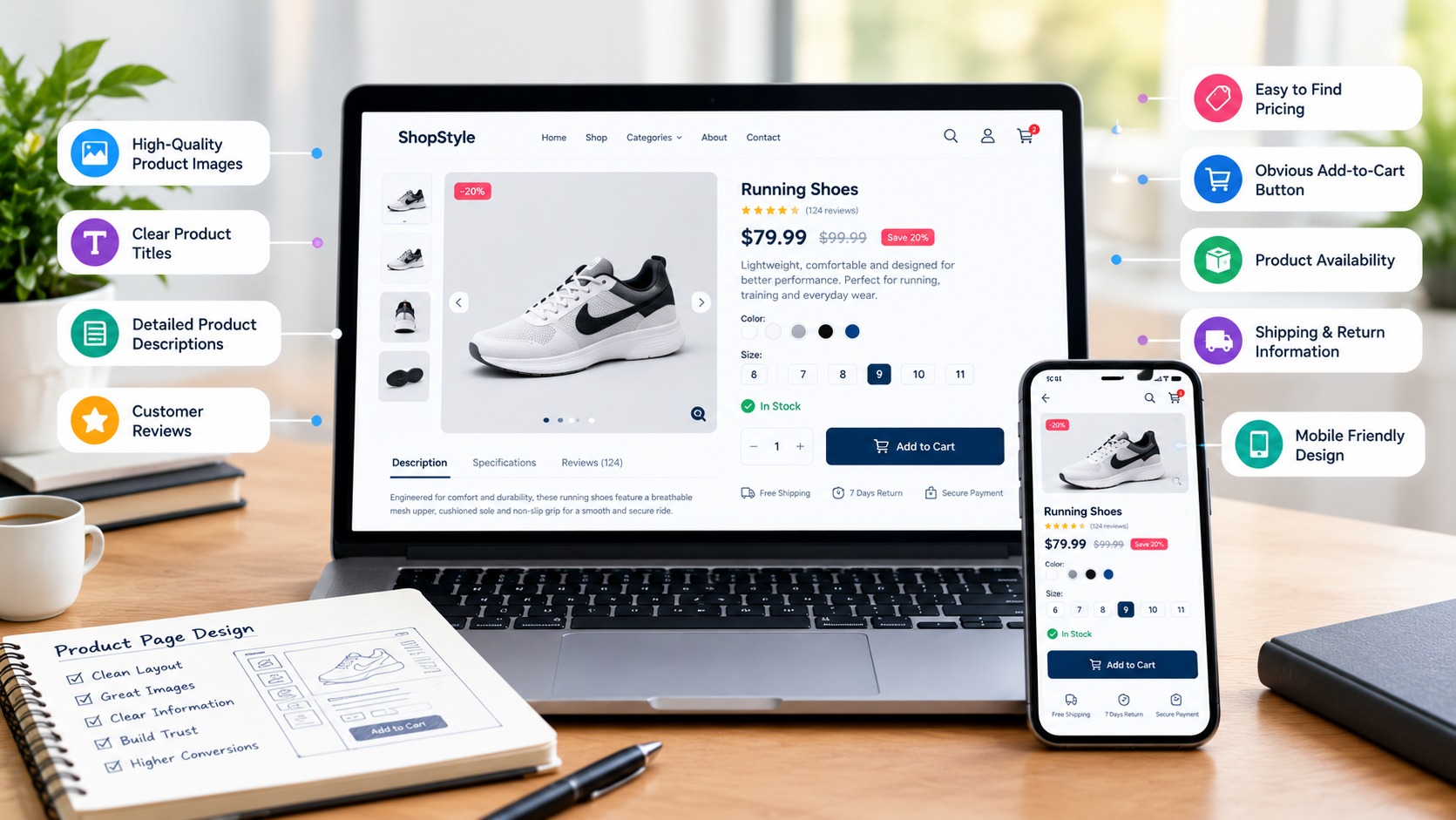
Your product page is where customers decide whether a product is worth purchasing. A well-designed product page should answer customer questions, present important information clearly, and make the buying process simple.
Good product page design combines usability, visual presentation, information, trust, and performance.
Why Product Page Design Matters
A customer cannot physically examine an online product. Your product page therefore needs to provide enough information to help them understand what they are buying.
A strong product page can include:
- High-quality images
- Clear product titles
- Detailed descriptions
- Pricing
- Product specifications
- Reviews
- Delivery information
- Return policies
- Clear purchase buttons
1. Use High-Quality Product Images
Images are one of the most important elements of an e-commerce product page.
Consider providing:
- Multiple angles
- Close-up views
- Lifestyle images
- Product dimensions
- Zoom functionality
Images should also be optimized so they do not unnecessarily slow down the page.
2. Write Clear Product Titles
The product title should immediately tell customers what the product is.
Avoid unnecessarily complicated titles. Include important identifying information when appropriate.
3. Create Useful Product Descriptions
A good product description should focus on customer needs.
Explain:
- What the product does
- Key features
- Benefits
- Materials
- Dimensions
- Compatibility
- Usage instructions
Avoid writing descriptions that simply repeat manufacturer specifications.
4. Make Pricing Easy to Find
Customers should not have to search for the price.
Display:
- Current price
- Original price when applicable
- Discount information
- Taxes or additional costs when relevant
5. Make the Add-to-Cart Button Obvious
The primary action should be visually easy to find.
On mobile devices, ensure that customers can interact with the purchase button comfortably.
6. Display Product Availability
If a product is out of stock, clearly communicate its status.
You can also consider:
- Notify-me options
- Expected restock information
- Alternative products
7. Include Customer Reviews
Reviews can provide useful information to potential buyers.
Make review content easy to find and ensure the review system is transparent.
8. Explain Shipping and Returns
Customers often want to know when their order will arrive and what happens if they need to return it.
Provide clear information about:
- Shipping areas
- Delivery times
- Shipping costs
- Return conditions
- Refund policies
9. Optimize Product Pages for SEO
Include relevant keywords naturally in:
- Product titles
- Headings
- Descriptions
- Image ALT text
- URLs
- Metadata
Avoid keyword stuffing.
10. Make Product Pages Mobile-Friendly
Your product page should work smoothly on smartphones.
Check:
- Image sizing
- Text readability
- Button placement
- Page speed
- Navigation
- Product variations
Conclusion
Good product page design helps customers understand products and move confidently toward a purchase.
Focus on clarity, useful information, strong visuals, mobile usability, trust, and performance.
For businesses that need a customized e-commerce experience, SSD Solutions provides technology and development solutions that can support different digital requirements.
FAQs
What should every product page include?
A product page should generally include a clear title, images, description, price, availability, purchase options, shipping information, and relevant policies.
How can I improve product page SEO?
Use relevant keywords naturally, optimize titles and descriptions, create SEO-friendly URLs, optimize images, and provide useful original content.
Should product descriptions be long?
They should be as detailed as necessary to answer customer questions. Quality and usefulness are more important than simply increasing word count.