
Subtotal ₨ 0
Introduction
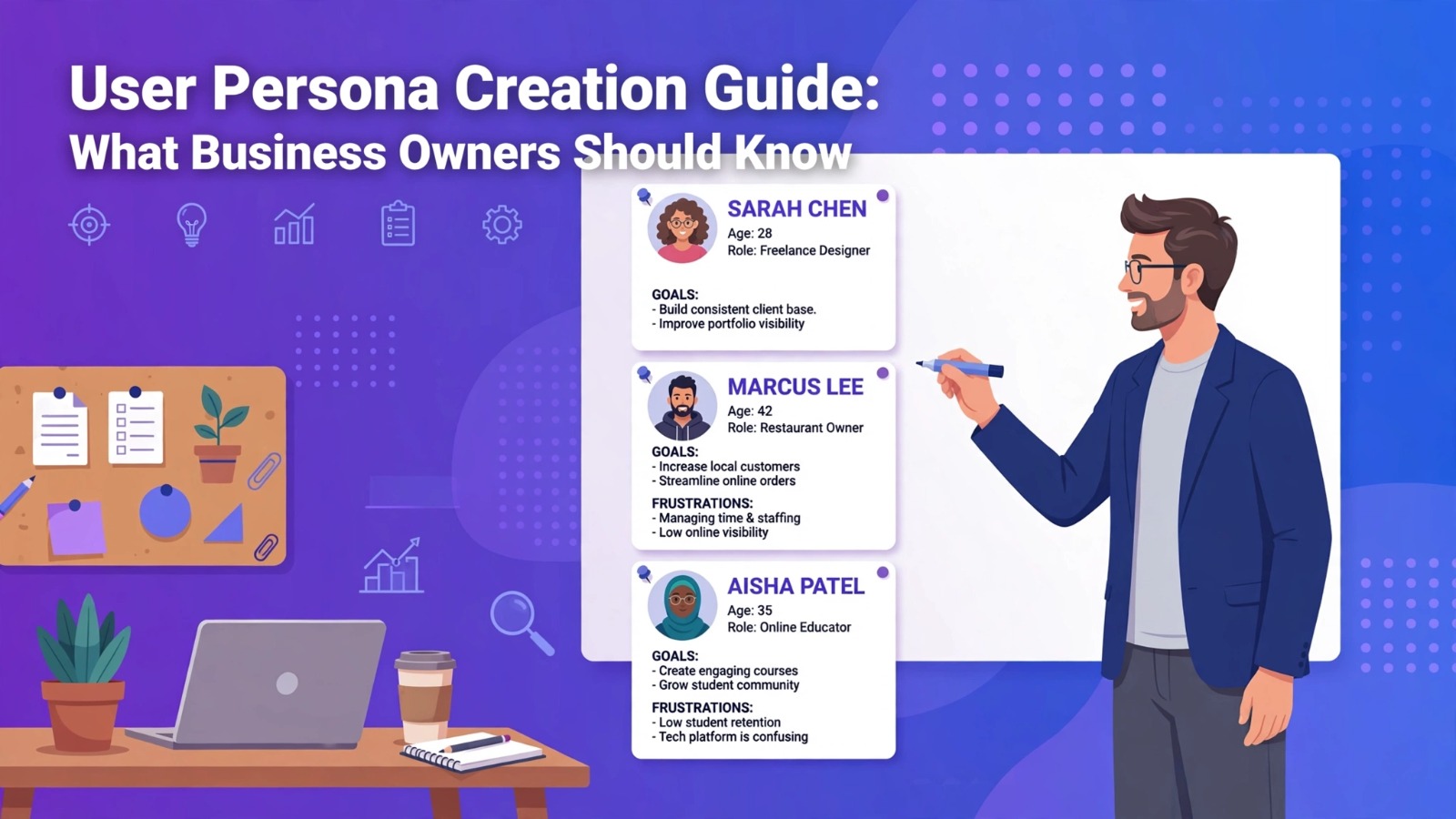
In today’s competitive market, understanding your customers is no longer optional — it’s essential. One of the most effective ways to achieve this is through user persona creation guide. For business owners, user personas act as detailed profiles of your ideal customers, helping you design products, services, and marketing strategies that truly resonate. This guide explains what user personas are, why they matter, and how business owners can create them step by step.This user persona creation guide helps business owners…
What is a User Persona?
A user persona is a semi‑fictional representation of your target customer based on real data, research, and insights. It includes demographic details, behavioral patterns, goals, challenges, and motivations. Instead of guessing what your audience wants, personas give you a clear picture of who they are and how they interact with your business.
Why Business Owners Need User Personas
For business owners, user personas provide clarity in decision‑making. They help you:
- Improve product development by aligning features with customer needs.
- Enhance marketing campaigns by targeting the right audience with the right message.
- Boost customer satisfaction by addressing pain points directly.
- Save resources by focusing on strategies that deliver results.
Without personas, businesses risk wasting time and money on initiatives that don’t connect with their audience.
Core Elements of a User Persona
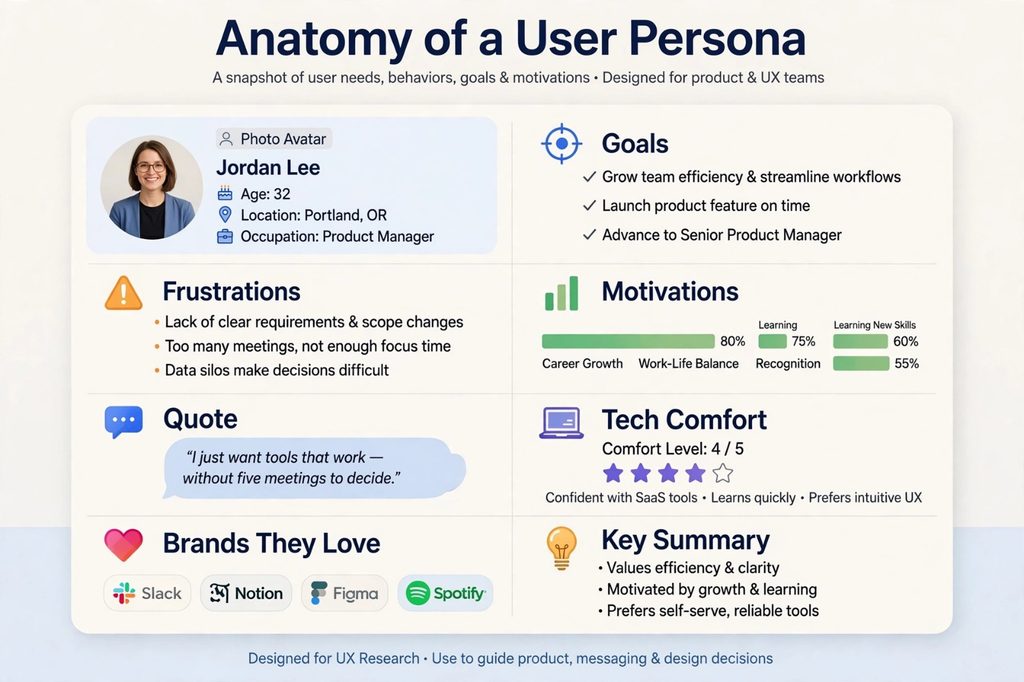
When creating a persona, business owners should include:
- Demographics: Age, gender, income, education, and location.
- Psychographics: Interests, values, lifestyle, and attitudes.
- Goals: What the customer wants to achieve using your product or service.
- Challenges: Problems or frustrations they face.
- Behaviors: Buying habits, preferred communication channels, and decision‑making style.
Step‑by‑Step User Persona Creation Guide
Step 1: Conduct Research
Start by gathering data from multiple sources: customer surveys, interviews, website analytics, and social media insights. The more real data you collect, the more accurate your personas will be.
Step 2: Identify Patterns
Look for common traits among your customers. For example, you may notice that many of your buyers are young professionals who value convenience and speed.
Step 3: Build Persona Profiles
Create 2–3 detailed profiles that represent your main customer segments. Give each persona a name, photo, and short description to make them feel real.
Step 4: Validate with Real Customers
Test your personas by comparing them with actual customer feedback. Adjust details if necessary to ensure accuracy.
Step 5:Applying the User Persona Creation Guide in Marketing
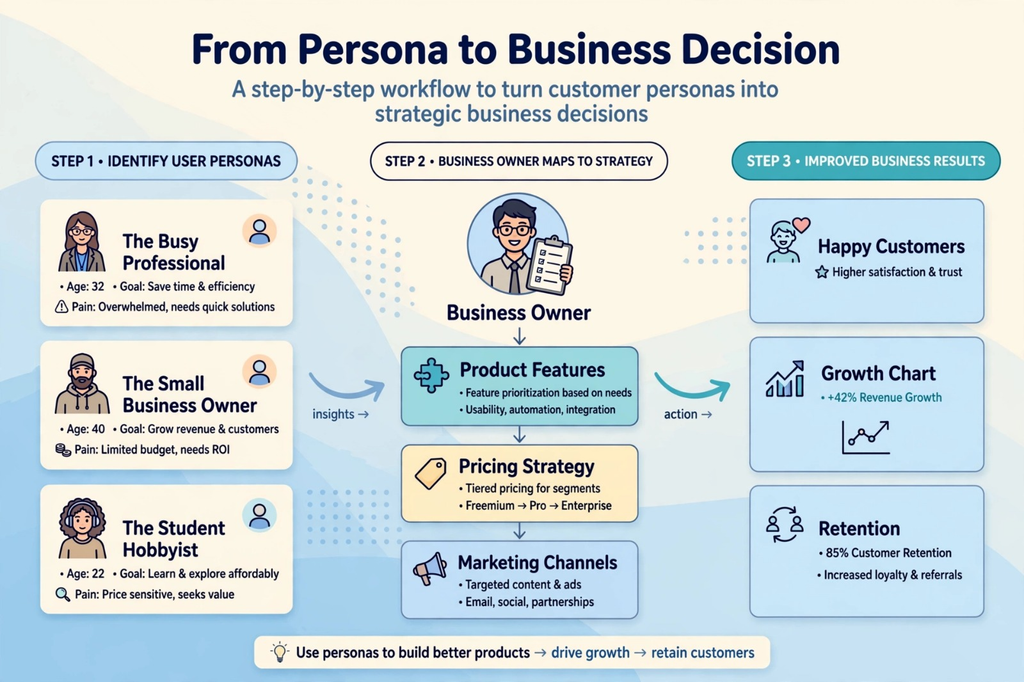
Use personas to guide product design, marketing campaigns, customer service strategies, and even sales pitches. Every decision should be checked against whether it aligns with your personas.
Best Practices for Business Owners
- Keep personas simple but detailed: Avoid overwhelming your team with too much data. Focus on the most relevant traits.
- Update regularly: Customer needs evolve. Review and refresh personas every 6–12 months.
- Share with your team: Ensure everyone — from marketing to product development — understands and uses personas.
- Focus on motivations, not just demographics: Knowing why customers act is more powerful than knowing who they are.
Common Mistakes to Avoid
By following a user persona creation guide, you avoid guesswork.
- Creating too many personas: Stick to 2–4 core personas. Too many can dilute focus.
- Relying on assumptions: Always base personas on real data, not guesses.
- Ignoring negative personas: Sometimes it’s useful to define who your product is not for, so you don’t waste resources.
- Failing to apply personas: Personas are useless if they sit in a document. They must guide real business decisions.
Real‑World Example
Imagine a small e‑commerce business selling fitness gear. Through research, they identify two main personas:
- Active Professionals: Ages 25–35, busy schedules, want quick workouts.
- Health‑Conscious Parents: Ages 35–45, focus on family wellness, prefer durable products.
By tailoring marketing campaigns — quick workout tips for professionals and family fitness bundles for parents — the business increases engagement and sales.
Conclusion
User persona creation is not just a marketing exercise; it’s a strategic tool that helps business owners understand and serve their customers better. By following best practices, avoiding common mistakes, and applying personas across all areas of your business, you can build stronger connections, improve customer satisfaction, and drive growth.This user persona creation guide empowers business owners to understand customers better.
Start small, focus on accuracy, and remember: the more you know your customers, the more successful your business will be.
For expert help applying personas to your business, visit our contact page at SSD Solutions.