
Subtotal ₨ 0
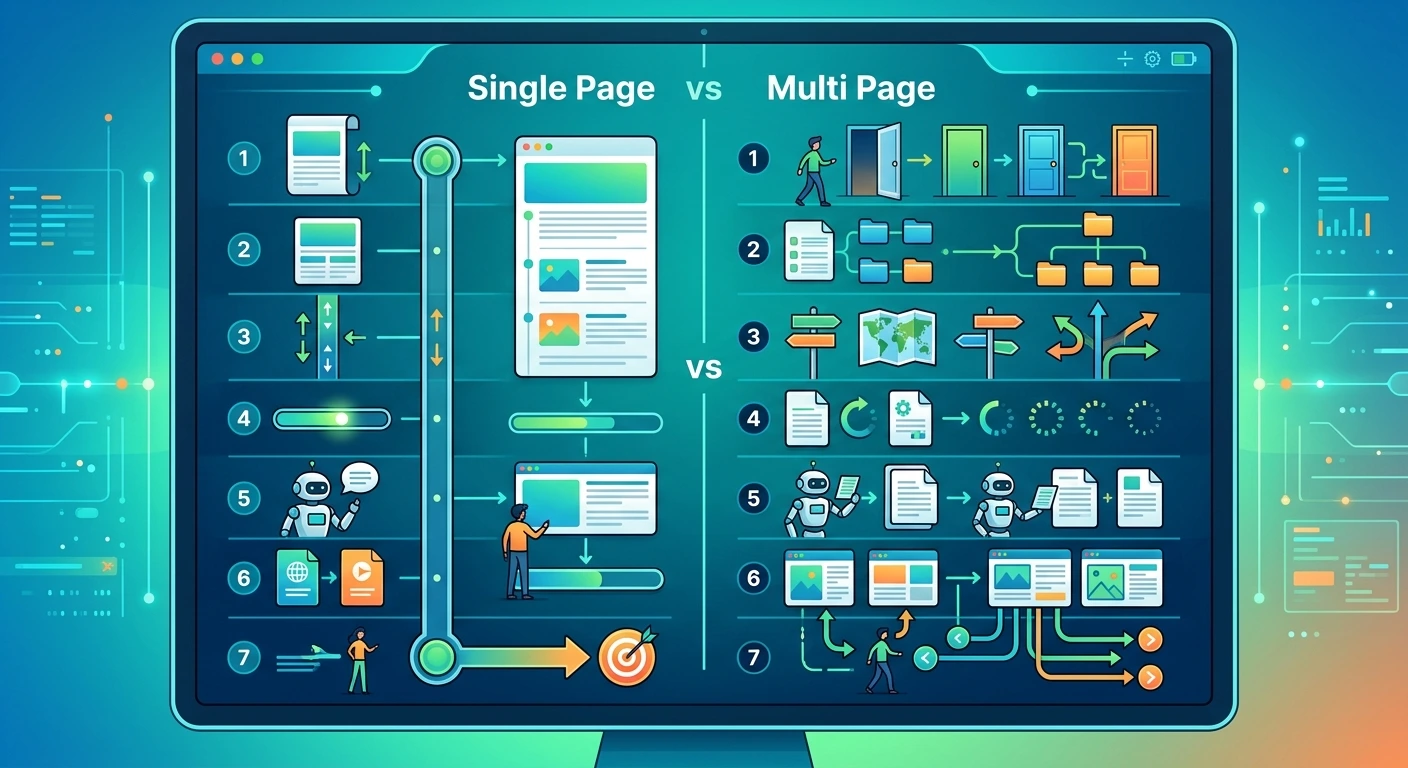
If you are planning your first site, the single page vs multi page websites decision is one of the earliest choices you will make, and it shapes everything from your SEO to how visitors move through your content. This beginner-friendly guide explains what each option is, compares 7 key differences, and helps you decide which structure fits your project.
Table of Contents
- What Is a Single Page Website?
- What Is a Multi Page Website?
- Single Page vs Multi Page Websites: 7 Essential Differences
- When to Choose a Single Page Website
- When to Choose a Multi Page Website
- Final Thoughts
- Frequently Asked Questions
What Is a Single Page Website?
Understanding both formats is the first step in the single page vs multi page websites decision.
A single page website keeps all of its content on one long page. Visitors scroll down through sections, such as an introduction, services, testimonials, and contact details, instead of clicking between separate pages. Navigation menus usually jump to a section further down the same page rather than loading a new one.
What Is a Multi Page Website?
A multi page website spreads content across several separate pages, such as Home, About, Services, and Contact, each with its own URL. Visitors click through a menu to move between pages, and each page can be built around a specific topic or goal.
Single Page vs Multi Page Websites: 7 Essential Differences
In the single page vs multi page websites comparison, here is how the two structures stack up on the factors that matter most for beginners:
| Factor | Single Page Website | Multi Page Website |
|---|---|---|
| Best For | Portfolios, simple businesses, events | Businesses with multiple services or products |
| SEO Potential | Limited, one page to rank | Stronger, multiple pages can target different keywords |
| Content Volume | Best for small amounts of content | Handles large or growing content well |
| User Navigation | Simple scrolling, fewer choices | Menu-based, more structured paths |
| Build Time | Usually faster to launch | Takes longer with more pages to plan |
| Mobile Experience | Very smooth, one continuous scroll | Good, but depends on menu design |
| Scalability | Harder to expand later | Easier to add new pages over time |
When to Choose a Single Page Website
In the single page vs multi page websites decision, a single page site is a smart choice if:
- You are a freelancer, artist, or small business with one clear offer
- You are promoting a single event, product launch, or campaign
- You want visitors to follow one simple story from top to bottom
- Your content fits comfortably on one page without feeling crowded
When to Choose a Multi Page Website
On the other side of the single page vs multi page websites decision, a multi page site works better if:
- You offer multiple services or product categories
- You want to rank for several different search terms
- Your business has a blog, case studies, or resources to organize
- You expect your content to grow significantly over time
Search engines generally reward well-structured multi page sites because each page can target specific keywords in depth. Google’s SEO Starter Guide explains how page structure affects how your content is understood and ranked.
How to Decide Between the Two
If you are still weighing single page vs multi page websites for your own project, still unsure which fits? Ask yourself these quick questions before you commit:
- How much content do I have today, and how much will I add later?
- Do I want visitors to see everything at once, or explore specific topics?
- How important is ranking for several different search terms?
- Will my business grow into new services that need their own pages?
If most answers point toward simplicity and one clear message, a single page site fits well. If you expect growth, variety, or strong organic search traffic, a multi page site is usually the safer long-term choice.
Final Thoughts
There is no single right answer in the single page vs multi page websites debate. The choice comes down to how much content you have and how you want visitors to experience it. A single page website suits simple, focused goals, while a multi page website suits businesses that are ready to grow and want stronger long-term SEO. Start with what fits your current needs, since many sites expand from one structure to the other as the business grows.
At System Software Development Solution (SSD Sol), our team in Lahore builds both options in the single page vs multi page websites comparison tailored to your goals. Explore our web development services, learn more about us, or read our guide on top web development trends. Not sure which structure fits your project? Contact us for a free consultation.
Frequently Asked Questions
Is a single page website good for SEO?
It can work for simple businesses, but it is harder to rank for many keywords since there is only one page to optimize. A multi page site generally offers stronger long-term SEO potential.
Can I switch from a single page to a multi page website later?
Yes. Many businesses start with a single page site and expand into a multi page structure as their content and offerings grow.
Which is cheaper to build: single page or multi page?
A single page website is usually faster and cheaper to design and build, since there is less content and navigation to plan compared to a multi page site.
Which type of website loads faster?
Both can be fast if built well, but a single page site often feels faster since everything loads at once and there are no page reloads when scrolling.